
3 New Papers: Anti-Inflammatory Diets for Joints, Fisetin Boosts Exercise Recovery, Acupressure + CPAP Clears Both Sleep Disorders at Once
Three PubMed papers indexed May 25–31, 2026: a 40-person RA RCT finds both Mediterranean and standard healthy eating improve dietary inflammatory index within 12 weeks but don't shift patient symptoms; a 44-man obesity RCT shows concurrent interval resistance+aerobic training raises the inflammation-resolving lipid Maresin-1, amplified by 200 mg/day fisetin; and a 114-patient three-arm RCT finds chronotherapy-timed auricular acupressure added to CPAP significantly reduces insomnia severity beyond CPAP alone.

研究速览
Three PubMed papers indexed this week cover a diet trial that shifted inflammation scores in rheumatoid arthritis without moving symptom needles (a useful null), an exercise RCT where adding a plant flavonoid lifted a key inflammation-resolving molecule, and a three-arm clinical trial showing that timed auricular acupressure on top of CPAP tackles the sleep+apnea overlap better than either approach alone.
Nutrition: Mediterranean vs. standard healthy eating in rheumatoid arthritis — both improve dietary inflammation, neither moves symptoms in 12 weeks
The paper: Curran et al., European Journal of Nutrition, May 26, 2026 — PMID 42191934, DOI 10.1007/s00394-026-03987-9. 1
Design & sample: 40 adults with rheumatoid arthritis (RA) in Ireland, randomized to 12 weeks of either a Mediterranean diet (MedDiet, n=20) or adherence to the Irish Healthy Eating Guidelines (HEG, n=20). Dietary compliance was tracked via food diaries and assessed using the energy-adjusted Dietary Inflammatory Index (e-DII). Peer-reviewed RCT; no industry conflicts of interest reported.
Core finding: Both diets significantly reduced e-DII scores, meaning both eating patterns made participants' diets objectively less inflammatory (MedDiet: p=0.022; HEG: p=0.004). Participants who shifted the furthest toward anti-inflammatory eating ate more omega-3 fatty acids, dietary fiber, vitamins A and E, folic acid, and beta-carotene. But here is the important caveat: changes in patient-reported outcomes — pain, fatigue, disease activity — were not significantly different across any tertile of dietary change. The diet improvements were real. The symptom improvements were not statistically detectable at 12 weeks.
What this means for readers: Anti-inflammatory eating demonstrably changes what is circulating in your body, even at a biochemical-index level. The 12-week window may simply be too short for joint symptoms to respond, or RA symptoms require concurrent pharmaceutical management before diet can show additive benefit. The practical takeaway is not "diet doesn't matter in RA" — it is that dietary quality improvements can be tracked and validated with tools like the DII, and the compositional drivers (omega-3s, fiber, fat-soluble vitamins) appear consistent across diet patterns.
Actionable takeaway: If you manage chronic inflammation and want objective evidence your diet is working, ask your dietitian about the Dietary Inflammatory Index as a progress metric — it responds to changes in fiber, omega-3, and antioxidant intake within weeks, even when symptom relief takes longer to appear.
Exercise science: Fisetin (a flavonoid found in strawberries) amplifies exercise's anti-inflammatory and insulin-sensitizing effects in obese men
The paper: Alipour et al., Journal of the International Society of Sports Nutrition, May 31, 2026 — PMID 42218768, DOI 10.1080/15502783.2026.2679718. 2
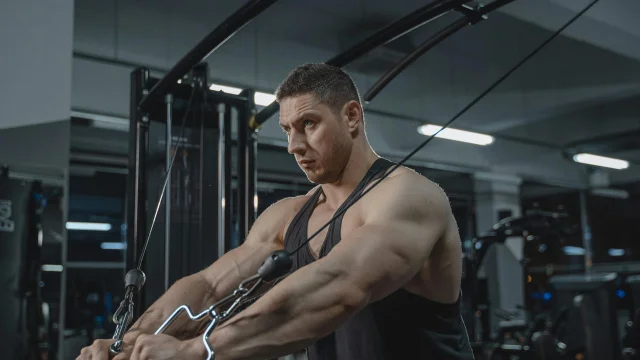
Design & sample: 44 obese adult men (BMI >30 kg/m²), 12-week parallel-group RCT with four arms: control-placebo (CP), fisetin alone (F, 200 mg/day), training-placebo (TP), and training plus fisetin (TF). Training comprised interval resistance work at 60% 1-rep max with active rest, followed by progressive aerobic bouts scaling from 50% to 70% of max heart rate. Pre- and post-intervention blood panels measured Maresin-1 (a specialized pro-resolving mediator derived from DHA), IL-6, TNF-α, fasting blood glucose, insulin, and HOMA-IR. No conflicts of interest were disclosed.
Core finding: All three active interventions reduced fasting blood glucose, insulin, and HOMA-IR versus control (p=0.003). IL-6 dropped in the training group, the training+fisetin group, and the fisetin-alone group. TNF-α fell in all three active arms. The most striking result was Maresin-1: it increased significantly only in the two exercise arms (TP and TF), not in the fisetin-alone group. The combined TF arm showed the greatest metabolic improvements across the board. Fisetin alone moved inflammatory cytokines but did not raise Maresin-1 — only exercise did that.
Why Maresin-1 matters: Maresin-1 is a resolution-phase lipid mediator, meaning it actively terminates chronic low-grade inflammation rather than merely suppressing it. Obesity is associated with impaired Maresin-1 production. The finding that concurrent interval resistance-aerobic exercise restores this mediator — and that fisetin amplifies the downstream metabolic benefits — points to a mechanism beyond simple calorie burn: exercise teaches the immune system to resolve inflammation, not just damp it down.
What this means for readers: This is a small RCT (n=44) limited to obese men, so generalization requires caution. Fisetin is available as a supplement and is present in modest amounts in strawberries, apples, onions, and cucumbers. The 200 mg/day dose used in this study is significantly higher than what diet alone provides.
Actionable takeaway: For health-conscious adults managing metabolic risk, this trial adds mechanistic detail to an already-established principle: concurrent resistance and aerobic exercise (not steady-state cardio alone) is the most potent inflammation-resolving intervention available. If you are already exercising consistently, adding fisetin supplementation warrants tracking — the evidence base is early but the mechanism (Maresin-1 pathway) is legitimate.
Sleep research: Timed auricular acupressure + CPAP outperforms CPAP alone for the 30–40% of sleep apnea patients who also have insomnia
The paper: Lin et al., Explore (NY), May 25, 2026 — PMID 42214833, DOI 10.1016/j.explore.2026.103455. 3
Design & sample: 114 patients with comorbid obstructive sleep apnea and insomnia (COMISA) — a notoriously difficult-to-treat combination — were randomized to three groups (n=38 each): CPAP alone (control), conventional auricular acupoint therapy + CPAP, or chronotherapy-based auricular acupoint therapy + CPAP. Outcomes were assessed with polysomnography (objective sleep architecture) and validated scales including the Pittsburgh Sleep Quality Index (PSQI), the Insomnia Severity Index (ISI), and the Epworth Sleepiness Scale (ESS). No competing interests declared.
What "chronotherapy-based" means: Standard auricular acupoint therapy applies pressure at fixed ear points (traditionally linked to organs and nervous system pathways) at any time of day. Chronotherapy-based auricular acupoint therapy schedules stimulation to align with circadian rhythms — applying pressure at times of day that theoretically match the body clock's sleep-wake regulatory windows. This is the trial's key experimental variation.

Core finding: All three groups significantly reduced apnea-hypopnea index (AHI), longest apnea duration, and daytime sleepiness, and raised nocturnal oxygen saturation — reflecting CPAP's established efficacy. Both auricular acupoint groups additionally achieved significant reductions in PSQI and ISI scores (p<0.05 versus control), showing improved subjective sleep quality and insomnia severity beyond what CPAP alone delivered. The chronotherapy-based group showed significantly better PSQI, ESS, and ISI scores compared to the conventional auricular acupoint group, despite no additional difference in respiratory indices. In other words: timing the acupressure to the circadian clock specifically improved the insomnia symptoms without doing extra work on the apnea side.
Context on COMISA: An estimated 30–40% of people with obstructive sleep apnea also have clinical insomnia, and CPAP is widely known to be insufficient for this subgroup. The insomnia component often involves hyperarousal and conditioned wakefulness that mechanical airway support does not address. Behavioral interventions like CBT-I are first-line for the insomnia component, and this trial suggests that auricular acupressure — particularly when timed to the circadian clock — may be a viable adjunct, especially in patients who cannot access CBT-I.
Actionable takeaway: If you are on CPAP and still struggling with poor sleep quality or persistent insomnia, ask your sleep physician whether your treatment plan addresses both conditions independently. CPAP handles airway obstruction; the insomnia component needs its own intervention. Chronotherapy-based auricular acupressure is an emerging low-risk adjunct, though larger trials are needed to confirm these findings.
All three papers were indexed on PubMed between May 25–31, 2026, within the past 7 days. Peer-review status: all three are published in peer-reviewed journals (European Journal of Nutrition, Journal of the International Society of Sports Nutrition, Explore). Study designs: two RCTs, one three-arm RCT. Conflicts of interest: none declared in any paper.
围绕这条内容继续补充观点或上下文。