Five Pieces Worth Your Time This Week
This week: Peter Hessler's memoir of childhood abuse and silence (TNY), George Packer on the venture capitalist who colonized Washington's AI and crypto policy (The Atlantic), Sophie Elmhirst inside Jeffrey Epstein's personal assistant and what she knew (The Guardian), Stefan Collini's reckoning with the bonfire being lit under British universities (LRB), and Josh Levin on the Savannah Bananas reviving the most complicated franchise in baseball history (The Atlantic).

A childhood paper route and its hidden cost. The venture capitalist who colonized Washington. The woman who scheduled Jeffrey Epstein's victims. The bonfire being lit under British universities. And a baseball team with the worst legacy in the sport trying to make something good from the wreckage.
1. "The Paperboy's Secret"
Peter Hessler · The New Yorker · June 8, 2026 · ~25 min
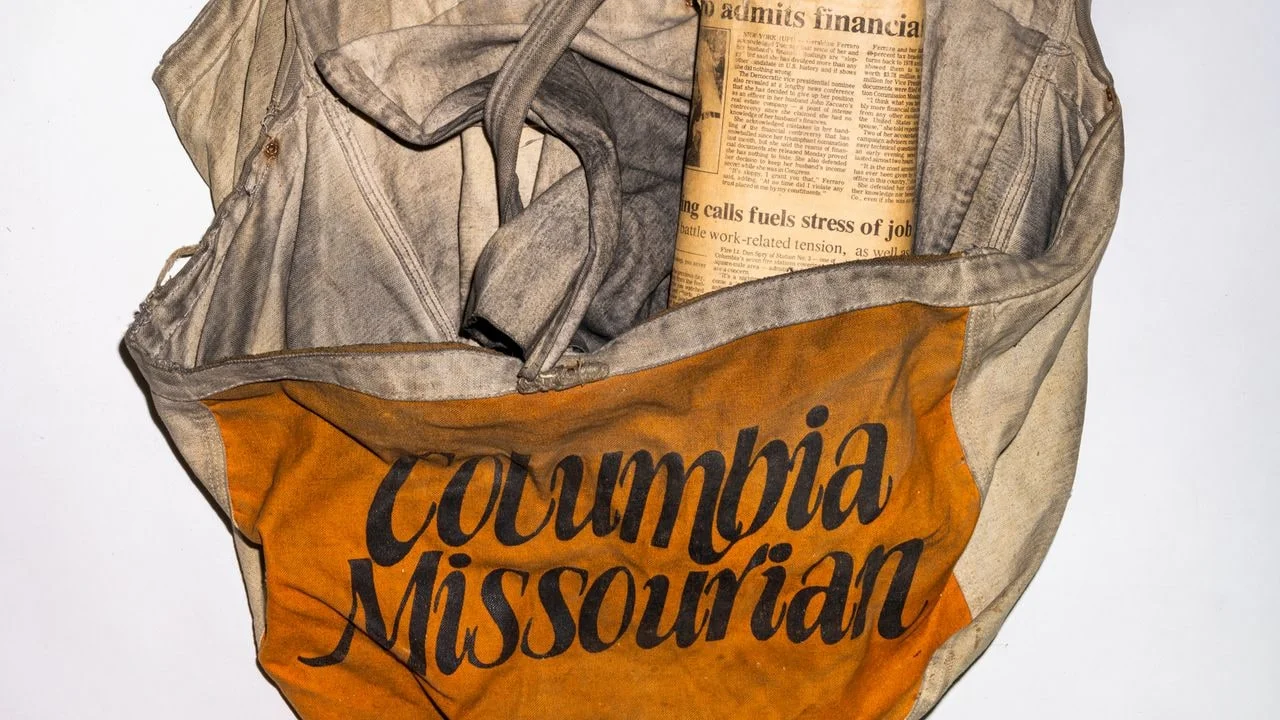
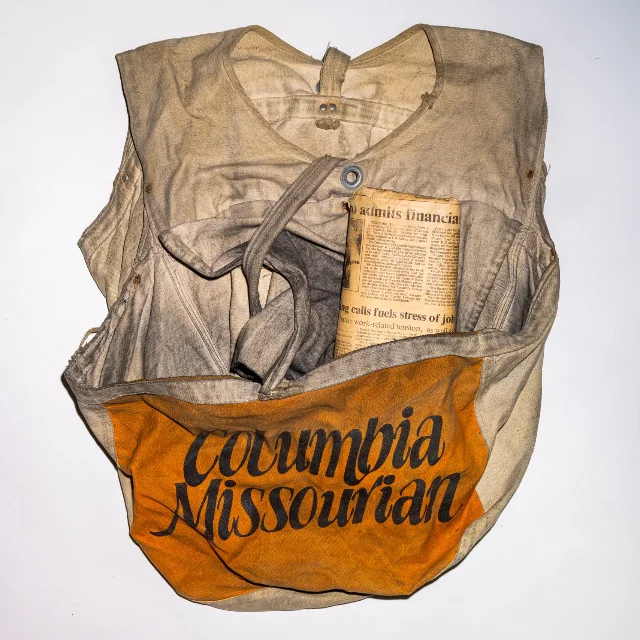
Peter Hessler spent his boyhood years delivering the Columbia Missourian in Columbia, Missouri — waking before dawn, filling a canvas bag, navigating silence and dogs and snow. A city clerk named Glenn Wood lived on the route. Wood was the kind of man a small Midwestern town trusts: Scoutmaster, Sunday-school teacher, perennial public servant. He tipped Hessler a quarter from a pocket. Then he did something else.
This is a memoir about sexual abuse, but it's also — and this is what keeps it from being only a horror story — an essay about the peculiar consciousness of a nine-year-old boy who didn't have the frame for what was happening to him. The money felt real. The status of "Carrier of the Month" felt real. The abuse registered partly, disturbingly, as a fact of the route that he filed away and didn't mention, the same way he didn't mention a dog that had bitten him. In 1982, Wood was arrested on multiple sodomy charges; he'd been doing this since at least 1938. When Hessler's father asked directly whether Wood had ever touched him, Hessler lied.
What Hessler builds from this — with the same eye-level precision he brought to his books about Egypt and China and rural Missouri — is an argument about how complicity gets manufactured through ordinary trust. A community rallied around a man because he fit perfectly into their image of civic virtue. Wood knew that image was armor. The abuse ran for decades across dozens of boys precisely because small-town reputations are designed to be unquestionable. Hessler doesn't make himself into a victim-hero. He's more honest than that: he was confused, tempted by quarters, and good at keeping secrets. He's still good at keeping secrets, he writes. He just stopped keeping this one. 1
Why read it: Hessler is one of the best nonfiction writers working in English, and this is the most personal thing he's published. It turns a very particular American childhood — paper routes, a journalism-school town, the end of an era when children did adult jobs in the dark — into something universal about silence and the shapes it takes.
2. "The Venture-Capital Populist"
George Packer · The Atlantic · June 2026 · ~30 min
David Sacks called the January 6 Capitol riot a "rebellion" and said Donald Trump should never hold office again. That was in 2021. By June 2024, Sacks was co-hosting a Trump fundraiser at his San Francisco mansion. By January 2025, he was the White House's AI and crypto tsar, still drawing a salary from his venture fund Craft Ventures.
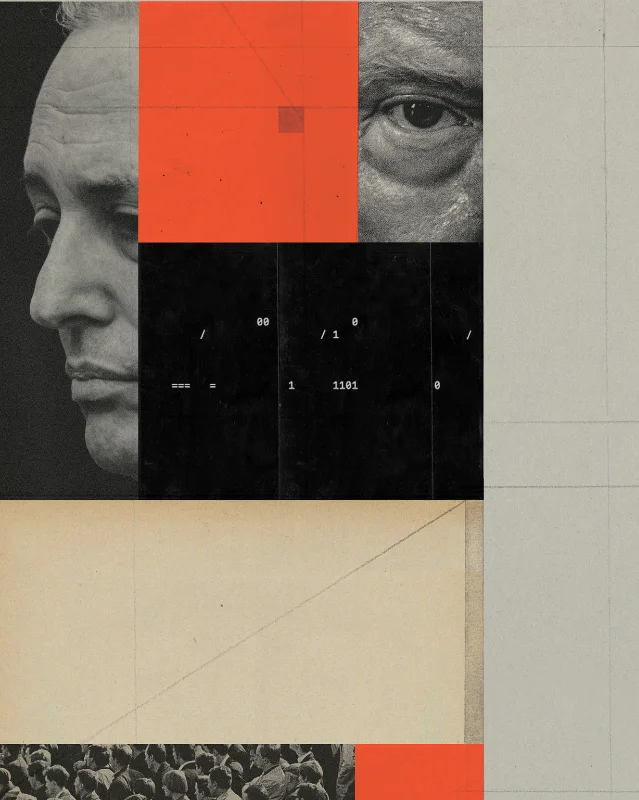
George Packer's portrait of Sacks is a case study in how Silicon Valley's political turn happened not gradually but through discrete self-interested choices at each fork. Sacks's core ideological move was to rebrand himself as a "populist" — concerned, he said, about mass immigration from people of "below-average intelligence" who threatened heartland voters' economic security. The argument let him position tech billionaires not as the elite but as allies of the working class against a different, coastal-professional elite. Packer documents how this framing gave cover to a set of policy moves that served Sacks and his portfolio almost without exception: pushing through the GENIUS stablecoin bill (friendly to crypto), lobbying to kill the GAIN AI Act (which would have prioritized domestic chip supply), reversing Biden's export controls on Nvidia chips to China. That last move, made after Nvidia CEO Jensen Huang lobbied Trump directly, was the one that generated real anger inside MAGA's populist wing — it helps Chinese AI development, which presumably isn't the point of the movement. 2
The New York Times found that despite a publicized asset divestiture, Sacks retained stakes in hundreds of AI-related companies. Ethics lawyers interviewed by Packer describe the "it's a small percentage of my portfolio" exemption Sacks obtained as legally novel and analytically absurd. The piece ends with Sacks being named co-chair of the President's Council of Advisors on Science and Technology — a body now composed almost entirely of tech billionaires and almost entirely absent of academic or public-sector representation.
Why read it: Because this is where AI and crypto policy is made right now, and Packer is one of the few writers who can track the actual mechanics of how Washington absorbs the people who claim to despise it.
3. "'Seriously the best boss ever': inside the world of Jeffrey Epstein's assistant"
Sophie Elmhirst · The Guardian Long Read · May 28, 2026 · ~25 min
In the 3.5 million documents released from the Epstein files, one name appears more than 160,000 times: Lesley Groff, Epstein's personal assistant for eighteen years. She scheduled him. She arranged travel and accommodation for the young women he brought in. She handled cash payments. She arranged, in at least one documented case, an abortion. She earned $60,000 a year in 2004 and $150,000 by 2016, plus a car, vacations, and enough to buy roughly $5 million worth of real estate in Connecticut.
Sophie Elmhirst's piece is a careful, reported, morally precise examination of what Groff knew and when, and — perhaps more usefully — a genuine attempt to understand how someone could do what Groff apparently did. Groff has maintained, through lawyers, that she knew nothing. In a 2014 email to her husband, she wrote: "I knew something was going on but I did not know what. This could be bad." She kept working for another five years. 3
Epstein's 2007 plea deal gave Groff immunity; federal prosecutors declined to charge her in 2021; civil suits have been dismissed. The House Oversight Committee has subpoenaed her to testify in June 2026. Legally, she is clear. Elmhirst doesn't pretend the legal resolution is also a moral one. What she does instead is construct a psychological portrait of how a person compartmentalizes — the discipline of Epstein's operation (no questions, no social contact with other staff), the pull of money and a stable life, the way the incentives to not-know arrange themselves around you.
Why read it: The Epstein story has generated enormous coverage and almost no reckoning with how the machine actually worked. Elmhirst writes about the people who weren't Epstein or Maxwell with the granularity their role deserves.
4. "Squadrons of Pigs: bonfire of the universities"
Stefan Collini · London Review of Books · June 4, 2026 · ~35 min
A title that needs explanation: "squadrons of pigs" is a phrase used by a British university administrator to describe physics departments — meaning institutions that eat expensive resources without producing commercial returns. The phrase tells you something about what's happened to how British universities think about themselves.
Stefan Collini, emeritus professor of intellectual history at Cambridge and author of What Are Universities For?, has watched English higher education dismantle itself under market logic for fifteen years, and this is his most comprehensive — and, one senses, most exhausted — diagnosis. The numbers are bad and getting worse: 45% of higher education providers are projected to run deficits in 2025-26; real per-student funding has fallen roughly 40% since 2012; 28 modern languages departments have closed since 2014; chemistry enrollment is down 25% since 2019; music, philosophy, English literature, physics, and classics are disappearing outside a small cluster of elite institutions. The ironies are precise: some of the departments being cut ran highest in the last Research Excellence Framework assessments. Excellence is not protection. 4
What Collini explains, carefully, is why the market model doesn't work even on its own terms. Almost all universities charge the maximum fee. Students have not responded to price signals in ways that would generate competition; they've responded to proximity, reputation, and prestige. So the "consumer choice" rationale for the system produces no efficiency gains — only the systematic defunding of subjects that have no commercial exit. Collini also points out that the University of Oxford and the University of Sunderland are treated as if they respond to the same incentive structure, which is like designing an economic policy that treats Goldman Sachs and a credit union as functionally equivalent.
Why read it: Because this is a description of an irreversible process that will have completed itself before anyone politically important decides to care. And because Collini writes about institutions with the same precision historians bring to documents — he doesn't generalize when he can show you the exact mechanism that's killing something.
5. "The Clown Show"
Josh Levin · The Atlantic · June 2026 · ~30 min
In 1952, the Indianapolis Clowns signed an eighteen-year-old outfielder named Henry Aaron. In 1953, they signed Toni Stone, the first woman to play regular-season professional baseball. The team was also, from its founding, shaped by its original owner's decision to have players perform in blackface and wear grass skirts and communicate in mock-African gibberish to draw white audiences — a minstrel show dressed as a baseball team.
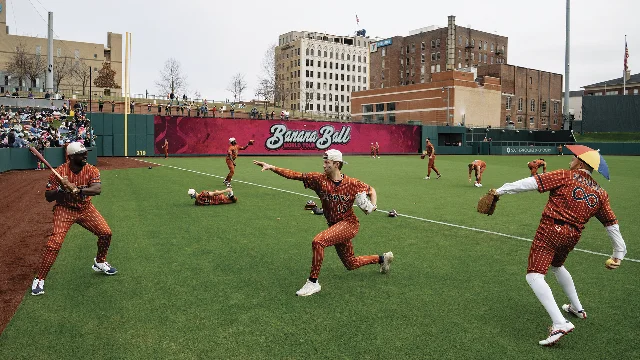
That's the inheritance the Savannah Bananas have taken on. The Bananas — Jesse Cole's wildly popular entertainment-baseball outfit, known for trick plays and dance routines — acquired the Clowns brand from the Negro Leagues Baseball Museum (NLBM), paid the museum a licensing fee that contributes to its $50 million capital campaign, and built a new roster that intentionally recruits Black players. The original Clowns, after integration collapsed the Negro Leagues, became fully white by the 1980s and folded. The new version includes former MLB center fielder Jackie Bradley Jr., trailblazing Black female pitcher Mo'ne Davis, and players like Kobe Robinson whose MLB-pipeline careers ended in injury. 5
Josh Levin's piece — he's the creator of Slow Burn and knows how to handle history that doesn't resolve cleanly — holds the contradiction without forcing a verdict. Black MLB player representation has dropped from over 18% in the mid-1980s to below 7% in 2026, matching 1956 levels. NLBM president Bob Kendrick supports the project. Ninety-one-year-old Reginald Howard, who played second base for the original 1950s Clowns, calls what happened to Black baseball "Baseball's Silent Genocide." The question the piece can't quite answer — by design — is whether the new Clowns recovers the Hank Aaron end of the legacy or the grass-skirt end.
Why read it: Sports history as a mirror on race, capitalism, and how institutions decide which past they want to own. Levin is particularly good at finding the specific human beings — a 91-year-old former second baseman, an injured A-ball pitcher who got a second chance — through whom a larger story becomes visible.
このコンテンツについて、さらに観点や背景を補足しましょう。